I remember when I first came to understand what the teachers’ lounge was. I remember the smell of coffee, the edge of a cork board, and a rickety, low table; it felt forbidden. It had not, before that moment, occurred to me that teachers had jobs. I do not remember what I thought it was that teachers did, or how they came to be teachers, or why they persisted in teaching. They felt forceful and eternal, like the laws of physics and my parents. A teacher was a teacher, and she must always have been a teacher, the classroom her inviolable domain. Most notably, they were—like snow leopards and cobras—solitary creatures. My devoted fourth grade teacher, who tutored me in math, may have had a clear sight line to my beloved third grade teacher, who debunked fortune tellers, but they were at best planets passing in orbit.
The teachers’ lounge was evidence that teachers were in fact more like lions than cobras, members (when not in their domain) of a powerful society of authority figures who shared a love of burnt coffee. Still, even with that glimpse into their community, I still assumed they were somehow physically bound to the campus, demons trapped in the cycle of attendance and lunch. It did not occur to me to ask why teachers existed, why the specific teachers shared that specific lounge, or if they were there by choice at all. All I knew, at that point, was that they were a group of powerful people who (perhaps begrudgingly) communed with each other. The language arts teachers in my middle school clearly had a shared agenda and an implied hierarchy. You could tell who among them were the leaders and the outsiders, the cliques and their enemies. The detention teacher, who coached football, shared little with the gauzy drama teacher in the adjacent room, but they drank from the same brew.
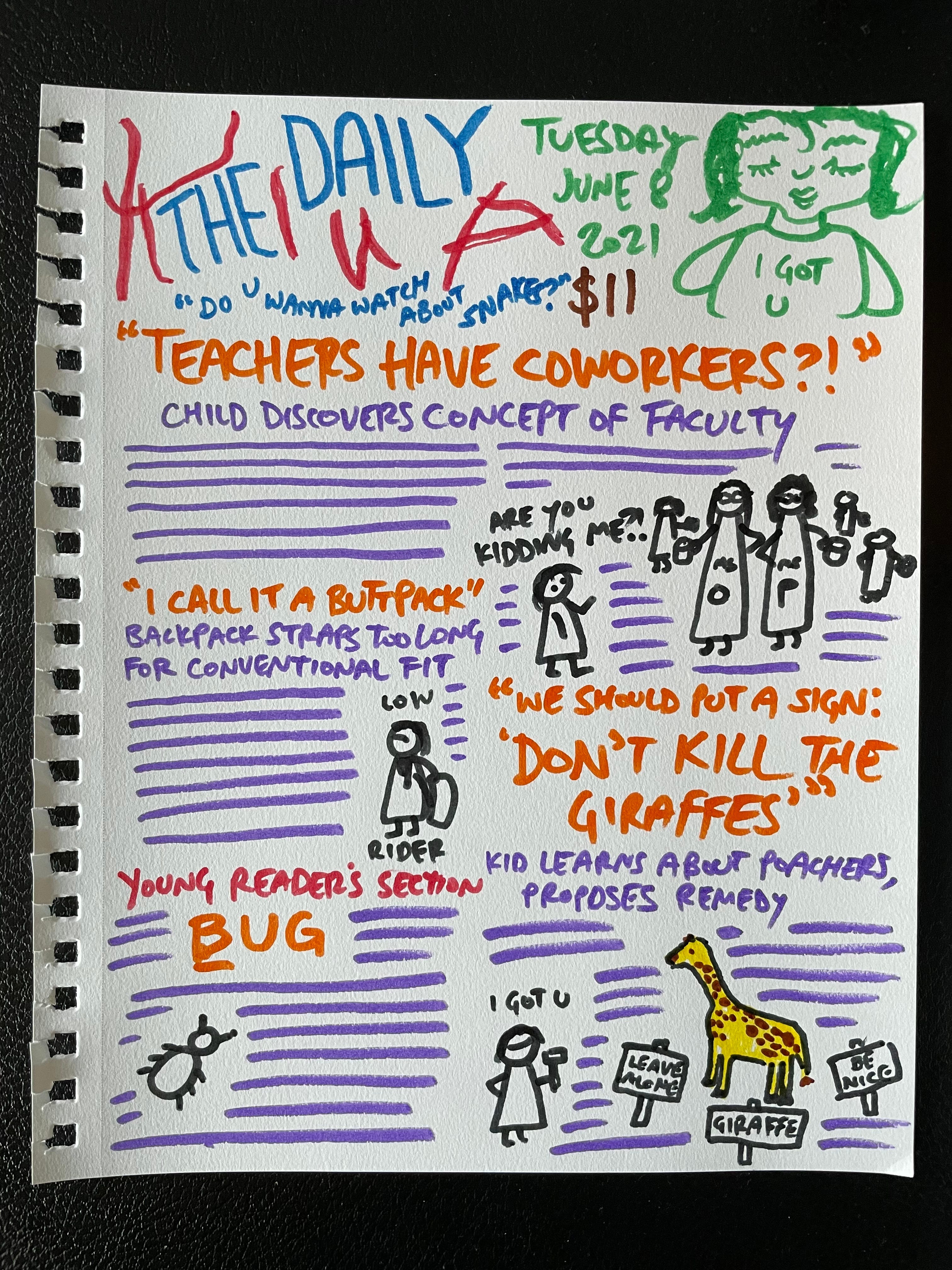
I did, of course, eventually figure out that teaching was a job, but I don’t think it really sank in until high school, when my French teacher quit and went to work in a call center. It was only then that it hit me, thirteen years older than Kina is today, having arrived at the same realization, that teachers had coworkers, and that the work they do is a choice they’ve made, and that they put up with their colleagues and (frequently) their students for the same variety of reasons that most working adults do: to pay the rent, to make a difference, to find community.